The toddlers in Toddler 1 at RisingOaks Early Learning | St. Patrick, have been exploring light and reflection through hands-on experiences with flashlights, mirrors, translucent blocks, and coloured lenses.
Program Name: Toddler 1

This month, the children in Toddler 1 at RisingOaks Early Learning | St. Patrick have been showing a growing interest in light and reflection. It began with Cassidy and Renzo’s curiosity and excitement when they noticed the light from the iPad reflecting onto the ceiling during lunch one day. Soon, our lunchroom was filled with laughter and joy as we watched the light dance across the ceiling, disappearing and reappearing. As the toddlers followed the light with their eyes, Cassidy reached up her hand in an attempt to “catch” it.

This emerging interest inspired Eria to introduce a flashlight and mirror, reflecting the light onto our whiteboard so it would be within reach for the children to explore. Cassidy and Renzo once again followed the light. Cassidy repeatedly tapped the whiteboard where the reflection appeared, trying to “catch” the light.

To extend the exploration further, Eria wondered what would happen if we used our translucent blocks to shine the light through. How might the toddlers respond to the light changing colours? Cassidy was mesmerized by the changing colours and reached for the flashlight to try it herself. She carefully balanced a yellow block on top of the flashlight and watched as the light changed colour. Cassidy then explored other blocks, switching to green, blue, and purple, shining the light through each one and observing how the colour of the light changed depending on the block she used.

Building on these emerging interests, Nitya later set up another experience. She introduced additional flashlights along with a variety of coloured lenses for the toddlers to investigate. Dino and Renzo began by experimenting with how to turn the flashlights on and off. Once Dino became confident with how the flashlight worked, he began exploring the coloured lenses. He shone the light through each lens, testing the different colours and noticing how the light changed. Through this process, Dino explored cause and effect as he experimented with the materials.

Renzo explored his flashlight in a different way. He pointed it toward the ceiling and watched the light move as he moved his hand. Excitedly, he called out, “Up light!” as he watched the beam shine above him. Renzo then continued exploring the room, pointing the light at different objects and observing how it interacted with them. He shone the light on toys, on the door, and even inside a cup, carefully noticing how the light appeared in different spaces.

To further extend the children’s curiosity, Nitya invited the group to explore the whiteboard again. She placed coloured magnetic tiles onto the board to see how the light might interact with them. This sparked the interest of several children, including Rahiya, Cassidy, Seren, Nellie, Vivaan, and Dino, who eagerly joined the exploration. The children experimented by shining their flashlights onto the whiteboard and moving the light around. They watched closely as the light changed colours through the tiles and as shadows appeared and moved with the motion of the light.

Rahiya brought over a blue lens to explore and excitedly noticed the colour change as she moved it across the board. She proudly demonstrated her discovery to Nitya, calling out, “Look! The blue is moving!”

Throughout these experiences, the children demonstrated curiosity, excitement, and attention to detail as they noticed changes in light and colour. They also engaged in problem-solving and early scientific thinking while exploring concepts such as cause and effect, light and shadow, reflection, and colour.

2 children at the white board

child with yellow magnifying glass

1 child at the white board - green light


 kids exploring light

The infants at RisingOaks Early Learning | St. Patrick explored colors, textures, and movement through a bubble wrap painting activity. Using rollers, hands, and curiosity, they discovered different ways to interact with the materials while sharing space.
Program Name: Infant

 Since the infants have been showing interest in sensory exploration, Tai prepared a simple activity with bubble wrap. She placed paper on a small table, added paint on top, and covered it with bubble wrap for the infants to explore with their senses. 

Paxton and Thaniel watched carefully as Tai set everything up. Tai offered them small rollers and modeled how to roll them over the bubble wrap. Paxton quickly began rolling the rollers on the surface, even trying to use two rollers at the same time! Later on the day, Remy and Paxton started tapping the rollers on the table to pop some of the bubbles. What a creative way to explore the material!

Thaniel and Harnaaz preferred to explore with their hands. They touched the bubble wrap and squished the paint underneath, watching the colors move and spread under the surface. With the help of educators, Zendaya and Max joined the table as well, exploring with both their hands and the rollers. Tai supported the experience by modeling language and curiosity. “Look what happens when the blue and purple mix!” she said as she moved the colors under the bubble wrap using her fingers.

Ramona also came to explore, testing both the rollers and her hands. She observed Zendaya, who looked very excited, moving her hands up and down while holding one roller. With a big smile, Ramona offered Zendaya a second roller to use. What a sweet moment of sharing! Later, Paxton noticed Tai wiping some paint from her hands with a cloth. When Tai placed the cloth on the table, Paxton picked it up and started rubbing it over the bubble wrap where the paint was underneath. “Were you trying to clean the table, Paxton?” Tai wondered.

Throughout the experience, the infants explored tactile and visual sensations as they watched the paint move under the bubble wrap. There were also lovely moments of observation, creativity, helping, and sharing while the children discovered different ways to interact with the materials. To extend this idea, Tai wants to bring in an activity where the infants can paint with bubble wrap.

child and educator bubble wrap paint

child with educator rolling paint

child with educator

child wiping paint iwth a cloth

1 child sitting and painting

2 children painting


Over the past few weeks, the children have shown a growing interest in animals and their habitats. Through discussions about different animals and hibernation, they have begun developing an understanding of how living things depend on specific environments to survive. This learning has been reflected in their play, as they use blocks and magnetic tiles to construct habitats for both animals and humans, demonstrating their ability to apply new knowledge in meaningful ways. In response to this strong interest, we have chosen “Animals and Their Habitats” as our project focus for the coming months. Together, we will explore the children’s thoughtful questions—such as where turtles are born, how birds build nests, and how animals know when to wake from hibernation—through research, discussion, and hands-on experiences that support inquiry and critical thinking
Program Name: School-age 1

Over the past several weeks, we have observed a significant increase in the children’s curiosity and engagement surrounding animals and their habitats. This emerging interest has been evident through their conversations, questions, imaginative play, and construction experiences. As educators, we view these moments as valuable opportunities to extend learning through inquiry-based exploration and child-led investigation.

Throughout the school day, the children have been exploring different types of animals, discussing their characteristics, and learning about which animals hibernate. These discussions have supported the development of early scientific thinking, classification skills, and an understanding of seasonal changes. The children have demonstrated growing awareness that animals have specific needs and that their environments play an important role in their survival.

This understanding has been particularly visible during open-ended play experiences. Many children have taken the initiative to design and construct their own environments for the animals available on our classroom cart. Using blocks, loose parts, and magnetic tiles, they have collaboratively built a variety of habitats. Some children have carefully constructed forest settings for woodland animals, while others have designed imaginative human habitats under tables and within cozy classroom spaces. These experiences support spatial awareness, problem-solving, engineering skills, and cooperative learning.

Importantly, the children’s constructions reflect their developing knowledge of animal habitats. For example, Claire shared, “Look Sam! This is my forest for my birds,” demonstrating her understanding that certain birds live among trees in forest environments. Deacon explained, “This is my human habitat,” as he used magnetic tiles to design a structured living space, showing his ability to transfer the concept of habitat to human environments. These moments highlight how children are synthesizing information and expressing their understanding through play.

In response to this sustained interest, we have decided to adopt “Animals and Their Habitats” as our long-term project focus. Over the coming months, we will engage in collaborative research, hands-on investigations, literacy experiences, creative arts activities, and outdoor explorations to deepen the children’s understanding. This project-based approach will allow us to follow the children’s questions and theories while fostering critical thinking, communication, and inquiry skills.

Some of the questions guiding our exploration include:

  • “Where are turtles born?”
  • “How do birds make nests?”
  • “How do animals know when to wake up from hibernation?”

These thoughtful questions demonstrate the children’s emerging scientific reasoning and natural curiosity about the world around them. As we move forward, we will encourage the children to form hypotheses, gather information through books and observation, document their ideas, and reflect on their discoveries. We are excited to see how this project evolves and how the children continue to build their understanding of the interconnectedness between animals and their environments.
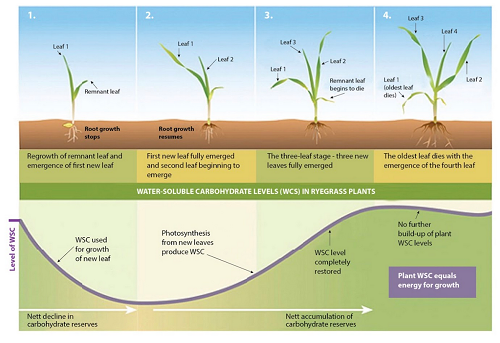
child with qtips and sticks

child with cotton balls and sticks

using loose parts

multiple children under the table

child under table


We can continue to use beads and string and do other to learn new skills through many different activities throughout the year.
Program Name: School-age 2

The children in the after and before school program at RisingOaks Early Learning | St. Patrick have been enjoying beading and crafting over the past month. We have been enjoying using melting beads, pony beads, and other types of beads to make animal creations, Pokémon, shapes, bracelets, and different types of art. The children have also been using rainbow loom to create with, they have been practicing putting beads and ornaments on the rainbow loom creations. 

 Some of the children have been helping the others to learn some of the beaded craft techniques and master skills. They have been learning through their friends and their learned experiences and being very creative and learning new skills. The children have been doing many art activities and being social with their friends by discussing what they are doing in a group. We have continued our interest in beading and stringing and thought of new ideas and items we could purchase to expand this interest. We looked through the Avron Canada magazine to find these things. We also looked on Pinterest for new activity ideas we can try. 

 Narin is our second teacher in the room and did some wonderful stringing activities with the children. We did a paper heart medallion stringing craft and a basket weaving stringing craft. The children were proud of their work and proud that they learned a new skill.

 Children in school age like to learn real skills and master new concepts. They are increasing their problem solving skills by challenging themselves to navigate string through small holes and slits. They are learning patience and concentration by fostering focus and perseverance as children work through and complete tasks. The children are strengthening their fine motor skills by using their small finger muscles, they are practicing hand eye coordination when using precise coordinate

movements. These tasks require bilateral coordination by encouraging both sides of the body to work together. Beading introduces concepts like sorting by colour, shape or size, as well as creating patterns.

a couple children beading

breading creatures

child showing his crochet

child choosing beads


By supporting their voices, identities, and interests, we are helping them build confidence, empathy, and a strong foundation for lifelong learning.
Program Name: Preschool 2

This month, the Preschool 2 room at RisingOaks Early Learning | St. Patrick has been exploring different cultures, self-identity, and positive ways to show kindness. Through meaningful conversations and hands-on experiences, the children have been building a deeper understanding of themselves and the world around them. Recently, the children began showing a strong interest in different occupations, as dramatic play continues to spark their curiosity. By providing activities that reflect real-life skills, the children have been able to expand their play in incredible ways.
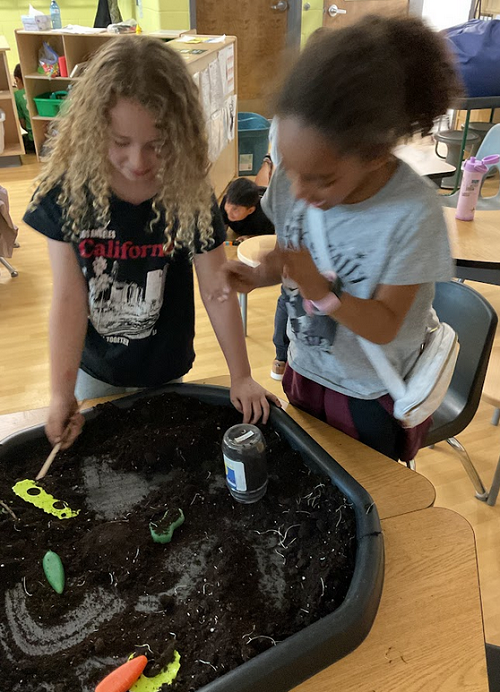
 

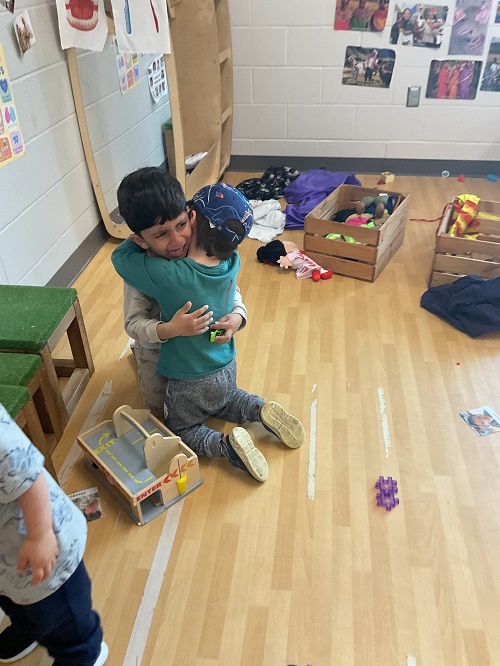
These opportunities support multiple areas of development, including science, sensory exploration, and social learning, while opening the door for new questions and discoveries. As part of our classroom discussions, the children became curious about holidays and cultural celebrations. In acknowledgement of Black History Month and Lunar New Year, we explored traditions that represent these important celebrations. To celebrate Lunar New Year, the children participated in a group dragon dance, learning how movement and tradition bring people together. They also created their own dragon using loose parts, allowing them to explore creativity while learning about cultural representation. To honour Black History Month, we read storybooks that highlighted kindness, empathy, and the importance of learning from one another. These stories became a powerful steppingstone in helping the children understand emotions and recognize how the words we use can affect others. One story we explored was Don’t Touch My Hair, which introduced the idea of self-expression and setting personal boundaries.


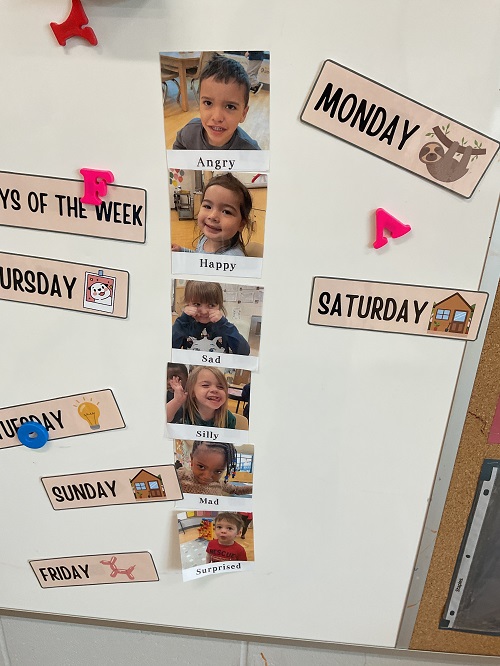
Through open discussion, the children practiced “standing up for their voice” and using their big voices to respectfully communicate their needs and feelings. We also explored the impact of words through meaningful visual activities. In one activity, the children said unkind words to a piece of paper while we crumpled it. Even after apologizing and smoothing it out, the paper remained wrinkled, helping the children understand that words can leave lasting effects. In another activity, we used an apple to demonstrate how hurtful words can cause unseen damage. As the apple was dropped after each unkind comment, the children later saw the bruising inside, creating a powerful moment of reflection. Together, we discussed how we can turn negative actions into positive behaviour. From these conversations, the children shared thoughtful ideas on how to show kindness, including standing up for their friends, asking others to join their play, not taking toys, offering help or a hug when someone feels upset, and cheering each other on as they reach milestones, big or small.


These moments have  helped strengthen their sense of empathy, belonging, and community within the classroom. Another meaningful group activity was the creation of individual self-identity collages. Through open-ended questions, the children  eflected on what they like, who they are, and who they dream of becoming. This activity connected deeply with their interest in occupations and helped us create opportunities to support real-life skill development aligned with the four  foundations of learning. Each child shared their ideas with the group, allowing us to reflect on our similarities, celebrate our differences, and appreciate each other’s dreams. As we continue forward, we remain committed to nurturing  the children’s curiosity by bringing real-world tools and experiences into our classroom.

individual art paint

group art

volcanoe

creating art wiyth paint


RisingOaks Early Learning logo

RisingOaks Early Learning Ontario
Administration Office
10 Washburn Drive, Unit 2 Kitchener, ON N2R 1S2
Charitable Registration Number: 137747705RR0001

Telephone: 519.894.0581
Fax: 519.894.6935
E-mail:

Publish the Menu module to "offcanvas" position. Here you can publish other modules as well.
Learn More.